The Numbers Everyone’s Citing, and Where They Actually Come From
When the Department of Government Efficiency announced its workforce reductions last year, the headlines settled around a figure that has since become almost liturgical: more than 200,000 federal employees separated from their positions since January 2025. That number lives in the OPM Federal Workforce Data, and I’ve spent the better part of six months trying to understand what it actually means for the city manager in Reno or the county clerk in rural Pennsylvania. The problem isn’t that the number is wrong. The problem is understanding what gets lost in translation when a federal workforce reduction becomes a local budget crisis.

I called the Office of Personnel Management three times before reaching someone who could walk me through their methodology. The second and third calls confirmed what the first source told me: they’re tracking separations, retirements, and attrition across agencies. But agencies count differently. Some report numbers monthly, others quarterly. Some include buyouts as separations; others don’t. The 200,000 figure is real, but it’s also a composite of inconsistent measurement across a sprawling federal apparatus. That matters when you’re trying to predict which program your city is losing next.
When SSA Closes, Disability Claims Don’t Disappear
The Social Security Administration is a concrete example of how federal cuts move through the system to local impact. The agency reduced its field office staff by approximately 7,000 employees, which sounds manageable on paper for an organization with tens of thousands of workers. But Social Security field offices are the ground-level interface between federal benefit programs and individual citizens. When staff shrinks, the work doesn’t vanish. It accumulates.
The SSA Inspector General documented processing delays of up to 90 days for disability claims by late 2025. That’s not a federal problem expressed in federal terms. That’s a grandmother in Des Moines waiting three months to learn whether her disability application will be approved. That’s a social services director in Columbus fielding calls from constituents who have no income while the application sits in a queue. I spoke with a disability rights advocate in Kentucky who had started tracking unofficial wait times by calling field offices directly. She found that some offices had moved to appointment-only service, cutting walk-ins to zero. The federal cut became a local service delivery crisis almost immediately.
What strikes me about this particular cut is how it exposes the friction between federal policy and local reality. A field office closure saves federal money. It creates local pain in ways that don’t show up on a federal balance sheet but do show up on the desks of city council members suddenly fielding constituent frustrations about services the city doesn’t control.
Following $47 Billion Out of City Budgets
The National League of Cities compiled data on federal grant distributions in fiscal year 2025 and found that municipalities lost approximately $47 billion compared to prior-year allocations. That figure is large enough to warrant skepticism. I wanted to know: does it include only direct grants, or does it include pass-through funding? Does it account for timing delays, or does it represent actual year-over-year losses? The NLC was transparent about their methodology. They tracked direct federal grants to municipalities plus Community Development Block Grants, which flow through states but are often administered locally. The $47 billion represents money that cities expected to receive based on historical allocation patterns and administrative structures that, as of early 2025, no longer existed.
I spent two afternoons reviewing city council meeting minutes from mid-sized cities across five states. The conversations are remarkably consistent. A city finance director in Fort Wayne mentioned a $3.2 million cut to community development funding. A parks director in Albuquerque noted that recreational grant funding had dried up. A housing authority director in Memphis described the sudden disappearance of a program that had been stable for a decade. These are not abstract losses. They are decisions about which pools get repaired, which housing programs continue, which community centers stay open. You can check the National League of Cities federal funding tracker to see how your own city absorbed these cuts.
When Agencies Close, Who Gets Sued?
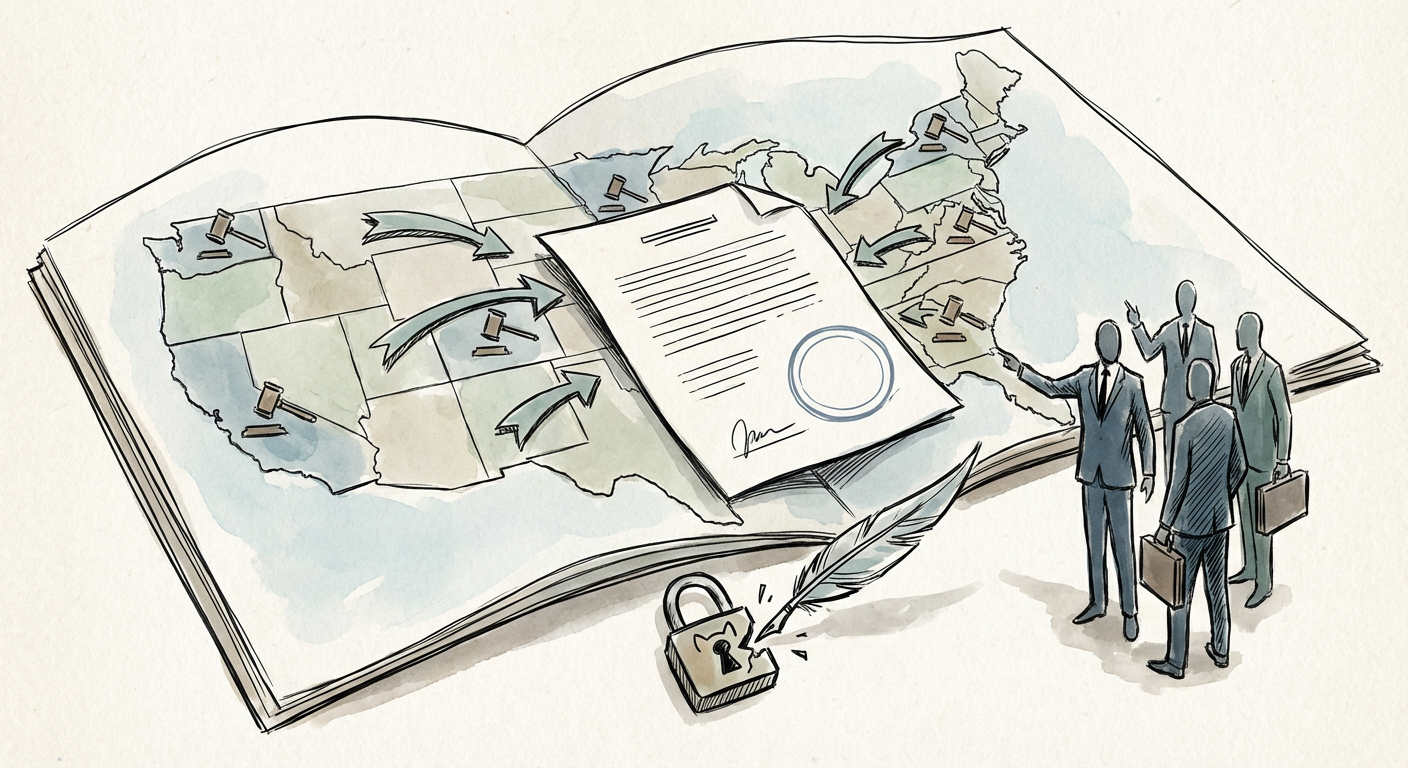
By March 2026, at least 14 states had filed lawsuits challenging the legality of agency closures directed through DOGE initiatives, according to the National Governors Association tracking dashboard. The lawsuits raise constitutional questions about whether executive authority permits the wholesale elimination of agencies that Congress created by statute. State attorneys general are treating those questions seriously. But from a local government perspective, what’s interesting is what happens during the litigation.
Cities and counties find themselves in a peculiar position. A federal agency might be shuttered, but its functions don’t evaporate. Environmental permits still need processing. Consumer complaints still arrive. Federal requirements that cities must meet remain on the books even if the federal office that administers them has closed. States and municipalities are left managing federal obligations without federal infrastructure or funding. It’s a governance vacuum that doesn’t resolve neatly in court, even if the court ultimately finds the agency closures unlawful. By the time a lawsuit concludes, the operational damage is often already done.
The Consumer Protection Bureau and the Billion-Dollar Quiet
Among the agencies restructured under DOGE’s mandate, the Consumer Financial Protection Bureau generated less visible local impact than SSA or community development programs, yet its closure tells an important story about how federal decisions create consequences nobody immediately notices. From its establishment in 2011 through 2025, the CFPB had recovered approximately $21 billion for consumers through enforcement actions, settlements, and regulatory work. That’s $21 billion that returned to households and small businesses after financial fraud or misconduct.
The CFPB was gutted in February 2025. I wanted to know who noticed. The answer is complicated. Consumer advocacy groups noticed. State attorneys general noticed. But city councils and county commissions mostly didn’t, because consumer protection enforcement doesn’t typically appear as a line item in municipal budgets. What disappeared was more subtle: an agency that had been processing complaints, investigating predatory lending, and creating regulatory pressure on financial institutions to maintain standards. Those functions don’t reappear in city government. They simply disappear from the federal apparatus.
I’m dwelling on this case for a methodological reason. When we track federal cuts, we tend to count visible things: employees, agencies, direct grants. We’re much worse at counting the regulatory capacity that disappears, the enforcement functions that vanish, the standards that nobody maintains anymore. A city budget officer can point to a $3 million grant cut on a spreadsheet. She cannot as easily quantify the cost of increased consumer fraud in her community, because that cost is distributed across households and never centralized into a single budget category.
What These Numbers Actually Tell Us
I started this reporting with three questions: how much federal capacity actually left the system? Where did that capacity sit in relation to local government? What happened next? The sources I consulted offered pieces of the answer, but the picture only clarified when I started treating the numbers not as endpoints but as starting points for investigation.
The 200,000 federal employee separations are real. The $47 billion in lost municipal grants is real. The 90-day disability claim backlogs are real. But what matters more is understanding that these are not three separate phenomena. They are aspects of a single, coordinated shift in federal capacity. When you remove 7,000 SSA employees, close consumer protection offices, and eliminate the agencies that administer community development grants, you are not making three different cuts. You are removing the infrastructure that delivers federal benefits, enforces federal standards, and funds local services.
If you’re a city manager, a county commissioner, or simply a resident watching your local government absorb federal cuts, move beyond the headlines to the actual data. Look at what grants your municipality received last year versus this year. Call your city finance office and ask where the cuts are hitting hardest. Check whether your state has filed a lawsuit challenging DOGE’s authority, and follow what happens in those courts. The story is not primarily about federal policy. It’s about how federal decisions land on your property tax bill, your community’s services, and your neighbor’s ability to get a disability claim processed.