The Trust Deficit Reaches Crisis Proportions
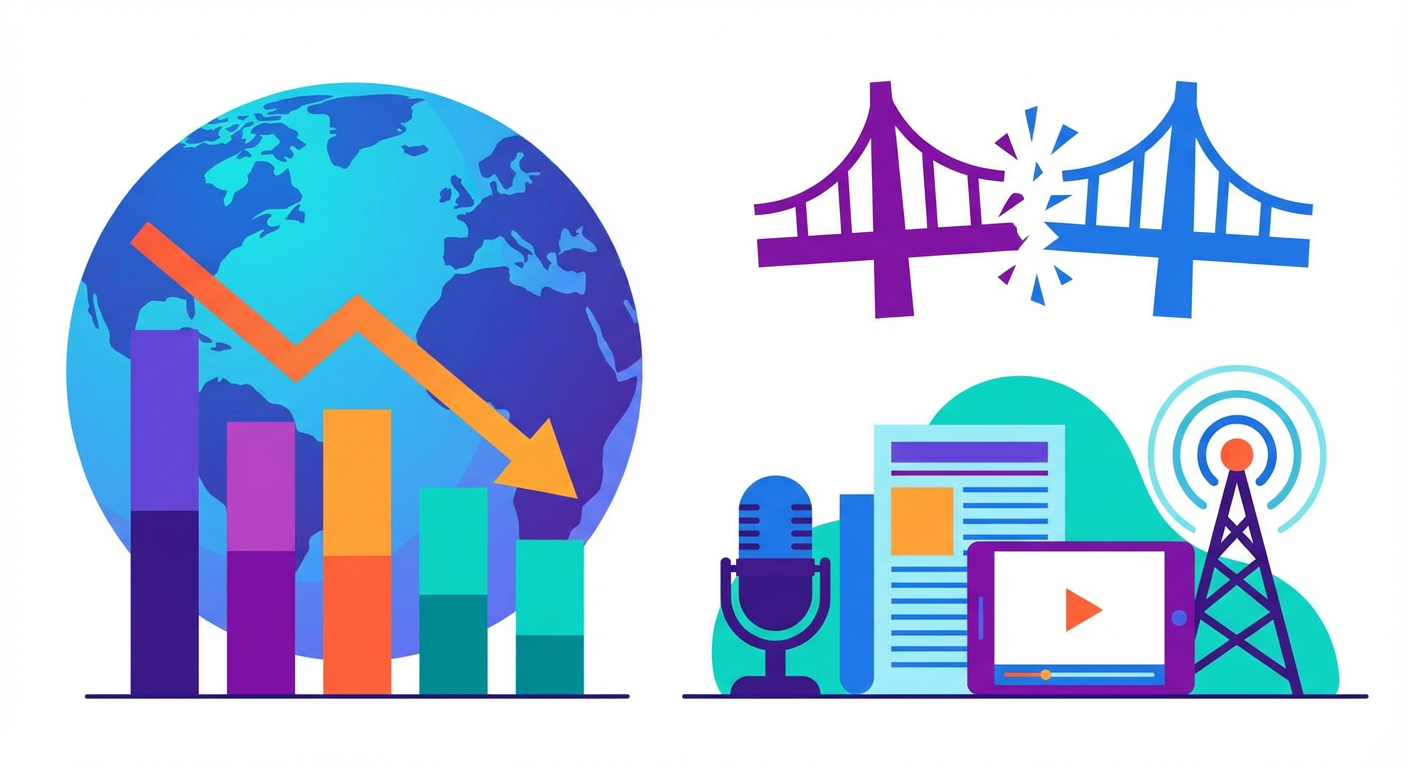
Public confidence in media institutions has crashed. Global surveys show that faith in journalism has collapsed across virtually every major democracy, with audiences increasingly skeptical of traditional news sources and uncertain about what information they can trust. This erosion of trust is more than just a professional challenge for journalists. It’s a fundamental breakdown in the shared understanding that societies need to function.
The collapse of media credibility comes at the worst possible time. We’re drowning in information sources and channels, yet starving for reliable facts. Where once a handful of gatekeepers controlled the flow of news, today’s fragmented media landscape offers countless alternatives, each claiming authority while often contradicting others. Researchers call this “truth decay,” where the line between opinion and fact becomes increasingly blurred in public consciousness.
The consequences extend far beyond newsrooms. When citizens can’t agree on basic facts about everything from election outcomes to public health measures, constructive democratic dialogue becomes nearly impossible. The trust crisis has morphed from an industry problem into a societal emergency that demands urgent attention from media organizations, platforms, and policymakers alike.
Political Polarization and the Fragmentation of Truth
The relationship between political identity and media consumption has become toxic. Research shows that individuals across the political spectrum now evaluate the credibility of news outlets primarily through partisan lenses. Conservatives and progressives develop dramatically different assessments of identical sources. This means outlets viewed as authoritative by one political group are often dismissed as biased propaganda by another, making consensus around factual reporting nearly impossible.
This fragmentation has accelerated the rise of confirmation bias in news consumption. Audiences actively seek information that reinforces their existing beliefs while avoiding sources that might challenge them. Social media algorithms make this worse by creating filter bubbles that limit exposure to diverse perspectives. What were once shared reference points for public discourse have splintered into competing narratives that operate according to different standards of evidence and reasoning.
The polarization of media trust also reflects deeper cultural and ideological divisions that extend beyond politics into questions of expertise, institutional authority, and social change. These underlying tensions make efforts to restore media credibility particularly challenging, as they require addressing journalistic practices and the broader social forces that shape how different communities understand and process information.
The Limitations of Current Fact-Checking Efforts
Fact-checking organizations have expanded rapidly worldwide, but they face significant obstacles in reaching the audiences most susceptible to misinformation. While fact-checkers have developed sophisticated methods for evaluating claims and debunking false narratives, their work often fails to penetrate the information bubbles where misleading content spreads most rapidly. The First Draft misinformation research has documented how fact-checks frequently arrive too late to counter viral falsehoods and struggle to achieve the same reach as the original misleading content.
Social media platforms have responded to misinformation concerns by implementing warning labels and content restrictions, but studies consistently show these interventions produce minimal behavioral change among users. Warning labels may actually backfire in some cases, triggering psychological reactance that makes individuals more likely to believe and share flagged content. The continued circulation of debunked claims suggests that technical solutions alone can’t address the deeper psychological and social factors that make misinformation appealing to certain audiences.
Perhaps most troubling is the finding that fact-checking efforts sometimes reinforce the very divisions they aim to bridge. When fact-checkers are perceived as partisan actors rather than neutral arbiters, their corrections may actually strengthen false beliefs among skeptical audiences. This dynamic highlights the importance of messenger credibility and suggests that effective counter-misinformation strategies must account for the political and cultural contexts in which information is consumed.
Emerging Approaches: Prevention Over Correction
Recognition of fact-checking limitations has sparked interest in proactive approaches that build resistance to misinformation before exposure occurs. Prebunking strategies, which inoculate audiences against common manipulation techniques, show considerably more promise than reactive debunking efforts. These interventions work by exposing people to weakened forms of misleading arguments alongside explanations of the deceptive tactics involved, creating cognitive antibodies that help individuals recognize and resist similar attempts at manipulation.
Educational initiatives focused on media literacy and critical thinking skills represent another preventive approach gaining traction among researchers and practitioners. Rather than addressing specific false claims, these programs aim to enhance audiences’ ability to evaluate information quality independently. Early results suggest that even brief interventions can improve people’s capacity to distinguish between reliable and unreliable sources, though questions remain about the long-term durability of these effects.
The shift toward prevention reflects a growing understanding that misinformation spreads not primarily because people lack access to accurate information, but because they lack the tools and motivation to distinguish between reliable and unreliable sources. This insight has profound implications for how news organizations, educators, and platform designers approach the challenge of maintaining an informed public in an era of information abundance.
The AI Challenge: Synthetic Media and Verification
Artificial intelligence technologies are introducing unprecedented complications to the already complex landscape of information verification. The emergence of sophisticated deepfake videos, AI-generated images, and synthetic text has made it increasingly difficult for both audiences and journalists to distinguish authentic content from fabricated material. Newsrooms now face the dual challenge of detecting AI-generated misinformation while also grappling with questions about their own use of artificial intelligence tools in reporting and content production.
The democratization of synthetic media creation tools means that high-quality fake content can now be produced by individuals without specialized technical skills or significant resources. This development has raised the stakes for verification processes and forced news organizations to invest in new detection technologies and training protocols. However, the rapid pace of AI advancement suggests that this will remain an ongoing arms race between creation and detection capabilities.
According to the Reuters Institute Digital News Report, newsrooms are struggling to develop consistent standards and practices for handling AI-generated content. The challenge extends beyond technical detection to include ethical questions about transparency, disclosure, and the potential for AI tools to introduce new forms of bias into news coverage. These issues will likely shape journalism practices for years to come as the industry adapts to an increasingly artificial media environment.
The intersection of misinformation, technology, and trust represents one of the defining challenges of our digital age. As the information landscape continues to change at breakneck pace, understanding these dynamics becomes essential for anyone trying to navigate an increasingly complex media environment. The path forward requires sustained collaboration between journalists, researchers, technologists, and citizens committed to preserving the possibility of shared truth in democratic societies.