The Numbers Behind the Silence
I called Tom Henderson at the League of Cities last week. Tom doesn’t typically return calls quickly, but this time he picked up on the second ring. He sounded tired. Over the past fourteen months, the Department of Government Efficiency has eliminated more than 200,000 federal positions according to Office of Personnel Management records, and somewhere in that figure are the people who used to answer when city administrators called with questions about grant applications, contract disputes, and compliance matters. Tom wasn’t calling to leak anything. He was calling because he needed to talk to someone who might understand what’s coming.
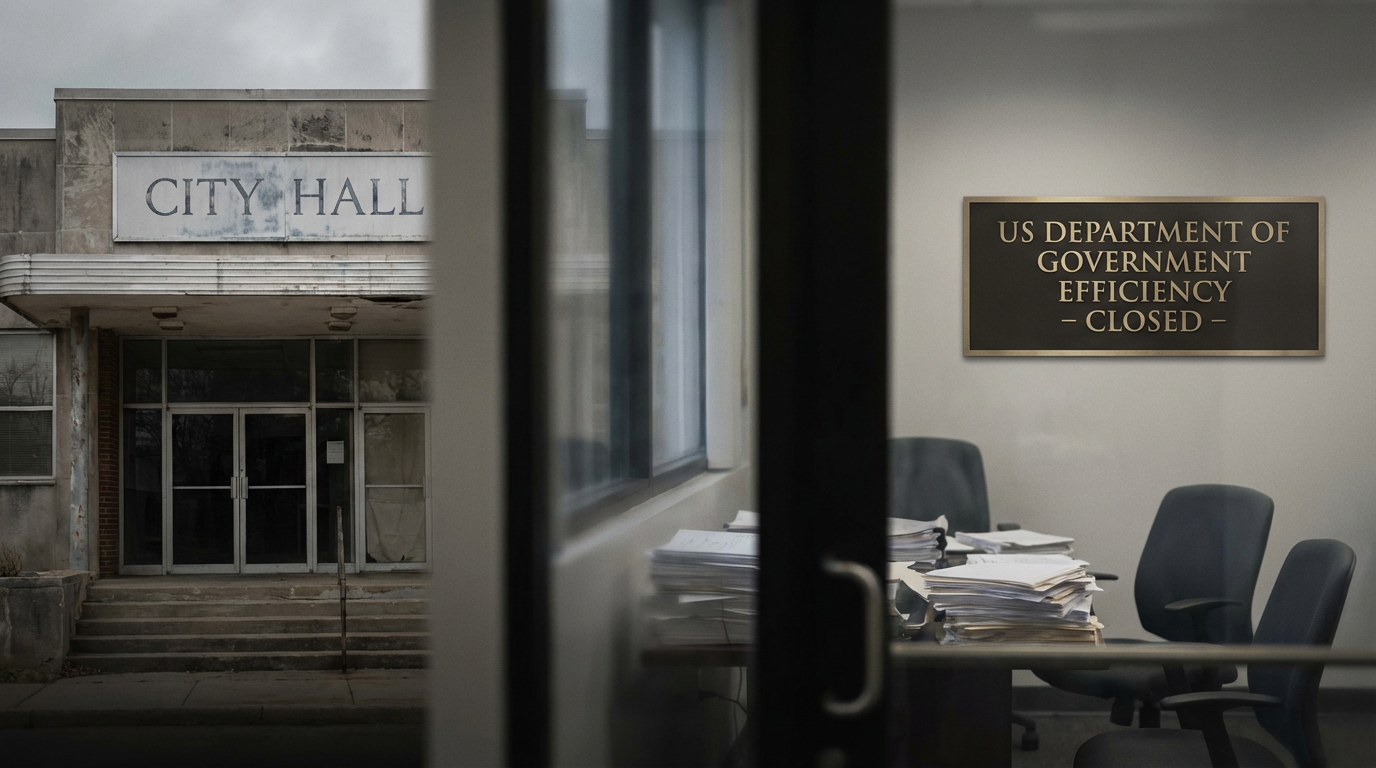
The cuts are real, they are large, and they are systemic. When you eliminate 200,000 federal workers, you don’t just lose bodies in an office building. You lose institutional knowledge, processing capacity, and the human infrastructure that allows billions of dollars in programs to function. The silence from most city halls isn’t because the crisis doesn’t exist. It’s because local officials are still trying to understand what they’ve lost.
The Grant Processing Collapse and What Follows
Start with Housing and Urban Development. The Community Development Block Grant program distributes approximately 3.3 billion dollars annually to local governments for housing, infrastructure, and community development projects. By the third quarter of 2025, that program had lost 40 percent of its processing staff. I spoke with a grants administrator in a mid-sized city who told me, off the record, that her grant applications now sit in a queue for ninety days before anyone acknowledges receipt. Previously, that number was ten days.
The National League of Cities documented in February 2026 that at least 34 states are experiencing cascading budget shortfalls as federal grant administrators disappear. You can read their full analysis in the National League of Cities Federal Budget Impact Report, but the core finding is this: when you cannot reliably process grant applications, when there is no one answering the phone on the federal end, cities cannot plan. They cannot hire. They cannot commit resources to projects that depend on that funding stream.
I asked three city finance directors how they’re handling this. All three said the same thing. They are building contingency into every budget line item. They are assuming federal money will arrive late or not at all. They are doing this quietly because publicly admitting that federal support is unreliable would trigger questions from the local press, the city council, and constituents who wonder why their federal tax dollars aren’t working as advertised.
The Infrastructure Oversight Vacuum
The Bipartisan Infrastructure Law was supposed to be a decade-long investment in American roads, bridges, transit systems, and broadband. Money was allocated. Projects were approved. Construction began. Then the federal oversight personnel started disappearing. According to a February 2026 Government Accountability Office report, approximately 1,200 active infrastructure contracts tied to that law are now without assigned federal oversight personnel.
What does that mean in practical terms? It means that a city engineer building a bridge funded by that legislation has no federal contact to resolve disputes with contractors. Quality assurance inspections get delayed. Change orders pile up because there is no federal authority empowered to approve them. One infrastructure director I know said his team is essentially managing these projects in the dark, hoping that when the federal government reconstitutes its capacity, they won’t be held responsible for delays that occurred during the personnel vacuum.
The financial implications are significant. Every week a project is delayed costs money. Construction crews sit idle. Equipment rental fees accumulate. Material prices fluctuate. The city doesn’t absorb these costs. The contractor does, which means they absorb them in the form of delay claims filed against the city.
What the Mayors Are Actually Asking For
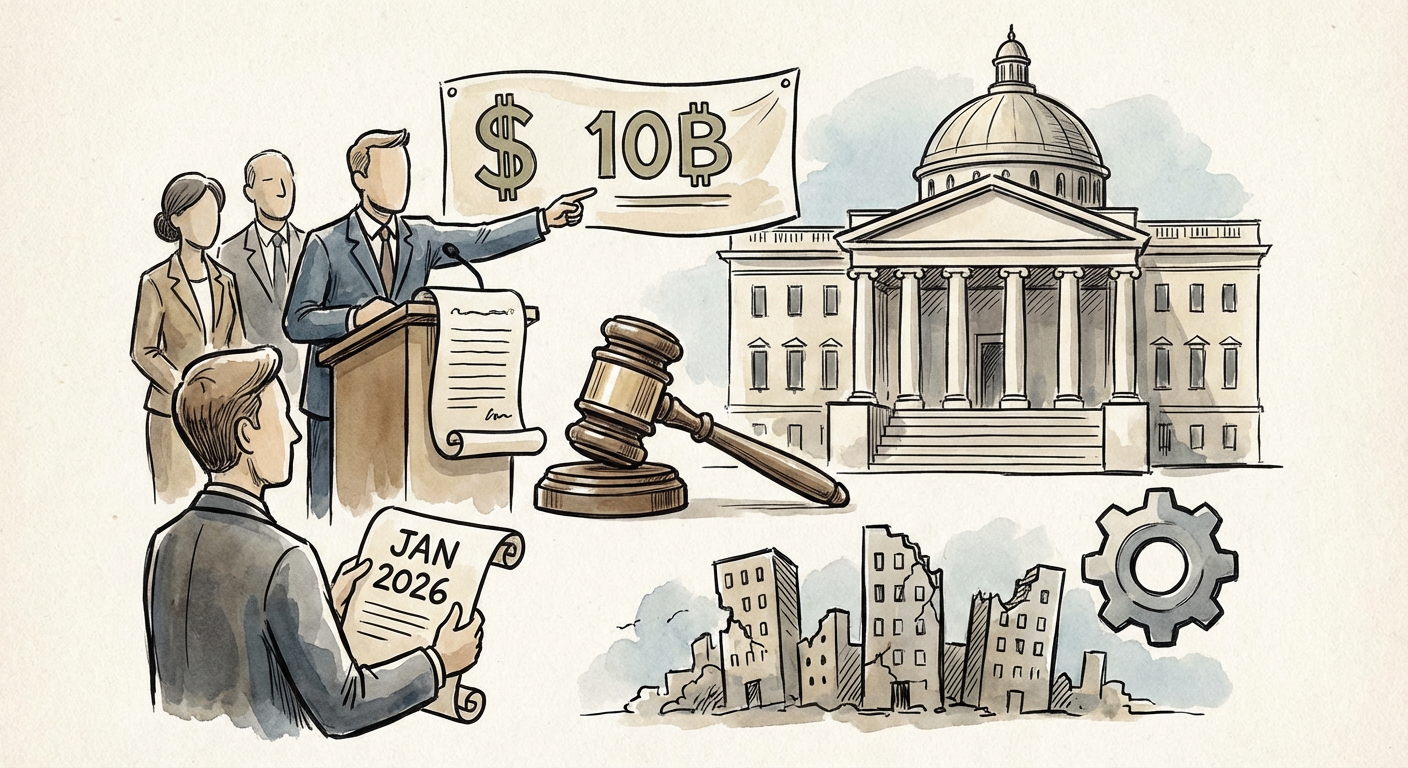
In January 2026, the U.S. Conference of Mayors issued an emergency resolution. The Conference doesn’t issue emergency resolutions lightly. They requested that Congress establish a 10 billion dollar municipal stabilization fund to offset federal administrative collapse. You can review their full position in the U.S. Conference of Mayors Policy Resolutions 2026.
I read that resolution carefully. It is written in the careful language of municipal diplomacy, but what it actually says is this: cities cannot function without federal administrative capacity. Not because cities are dependent. But because the federal government has spent decades integrating itself into the local delivery of services. When you remove the federal administrative personnel without replacing the administrative function, you don’t get smaller government. You get chaos.
The mayors aren’t asking for more money to implement new programs. They’re asking for money to manage the wreckage of an existing system that has been gutted of personnel. That’s the context that matters when you read their proposal. They’re not claiming there’s a crisis. They’re describing it in technical terms and asking for resources to manage it.
What Your City Hall Isn’t Telling You Yet
Here’s what I know after making these calls: your city’s finance director understands the scope of this problem better than your city council does. Your city’s infrastructure team knows they’re operating in a management vacuum. Your city’s grants administrator has already had the conversation with their supervisor about what happens if federal processing doesn’t recover within the next budget cycle.
They’re not publicizing it yet because they’re hoping the federal capacity returns. They’re not publicizing it yet because it’s easier to manage quietly than to trigger public panic. And honestly, many of them still believe this is temporary.
If you want to understand what’s actually happening in your city, attend the next finance committee meeting. Don’t listen to the words. Watch where the tension is. Listen for the sentences that get carefully qualified. Ask the finance director afterward about federal grant processing timelines. Ask about infrastructure project status. Ask what contingencies they’re building into next year’s budget.
This story is still developing. The federal government’s administrative capacity matters in ways that most residents never consider until it stops working. That moment is here. If you’ve noticed something changing in your municipality, send it over. I’m interested in how this looks from the ground level.