The Numbers Tell a Different Story Than the Headlines
While national political theater dominates cable news, the races that will actually impact your property taxes, your children’s classroom sizes, and whether that pothole on Main Street gets fixed are happening quietly in municipal buildings across our region. This November’s local ballot has three city council seats, two school board positions, and a mayoral race that has generated more real passion than any contest I’ve covered in fifteen years of sitting through budget hearings.
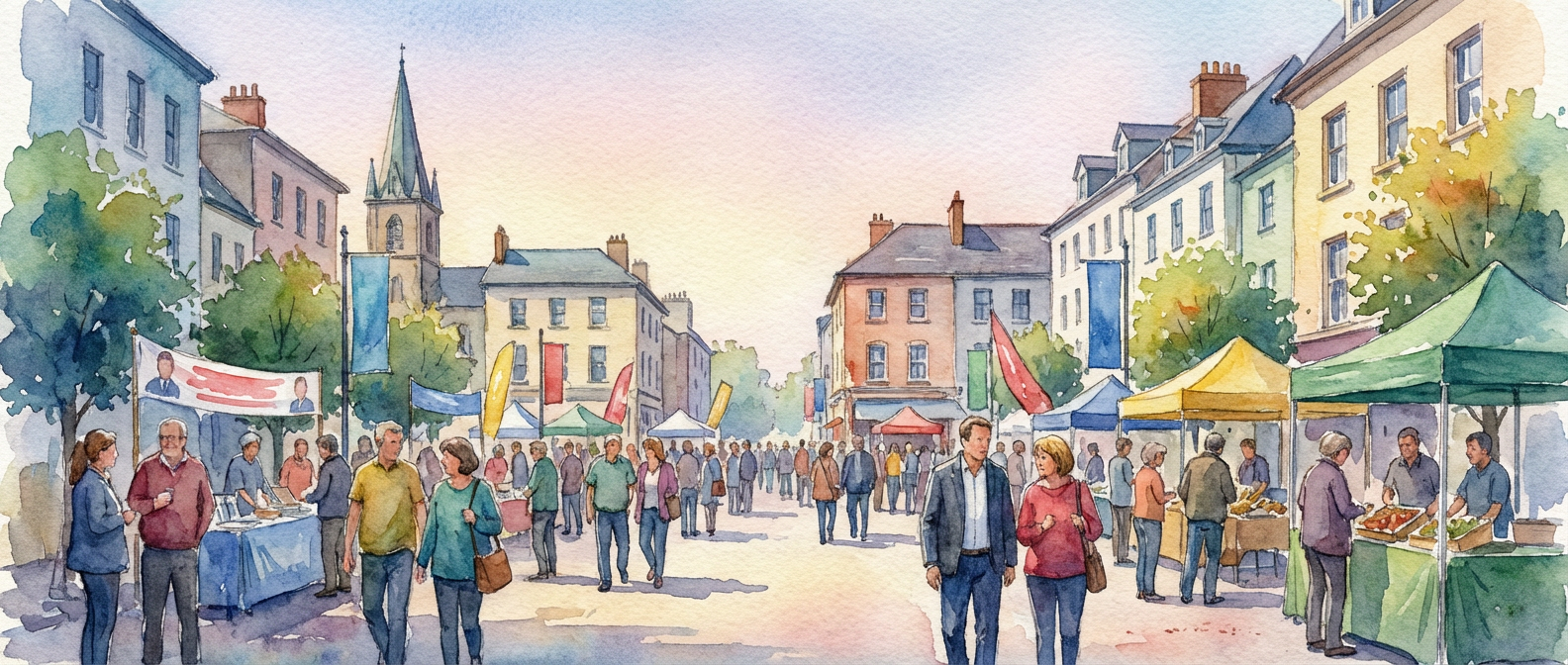
The voter registration numbers paint a picture that should concern every candidate currently door-knocking through neighborhoods. Registration is up 12 percent from the last municipal election cycle, but early voting requests are down 8 percent compared to the same period in 2020. What this means: we have more eligible voters who seem less engaged with actually casting ballots. The disconnect matters because local races typically get decided by margins thin enough that a single apartment complex or subdivision can swing the outcome.
After talking with campaign managers, volunteer coordinators, and the folks actually knocking doors, a clear pattern shows up. Voters are asking different questions this cycle. Instead of party affiliation or endorsements, residents want to know about snow removal response times, whether the new traffic light at Elm and Third will actually happen, and why their water bills increased 23 percent in eighteen months. These are governance questions, not political ones. The candidates who get that distinction are building real momentum.

The School Board Race Everyone Is Watching
District 4’s open school board seat has attracted five candidates, which is the most competitive field for any local education position in recent memory. The reason becomes obvious when you look at the numbers behind the passion: enrollment has jumped 340 students in two years while the district has added exactly zero new classroom teachers. Current board president Maria Santos, who isn’t seeking reelection, told me straight up that whoever wins this seat will inherit a crisis that needs immediate action, not campaign promises.
The candidates break into two distinct camps. Tom Richardson and Jennifer Kim are pushing fiscal responsibility and operational efficiency, pointing to the district’s 89 percent budget allocated to personnel costs as unsustainable. Meanwhile, Angela Torres, David Chen, and newcomer Sarah Mitchell argue for increased state funding advocacy and creative revenue solutions, including a potential municipal bond issue that would require voter approval.
The dividing line isn’t ideological but practical. Richardson, a retired plant manager, brings actual budget oversight experience but has never managed educational personnel. Torres, currently PTA president at Riverside Elementary, understands classroom dynamics but freely admits she needs help with financial projections. The voters I’ve talked with want competence more than philosophy, which makes this race particularly hard to predict.
City Council’s Infrastructure Reality Check
The three open council seats have generated surprisingly real debates, largely because incumbent Rachel Morrison decided to run on a platform of brutal honesty about municipal finances. Morrison’s public statements about the city’s deferred maintenance backlog, currently estimated at $4.2 million, have forced every candidate to address infrastructure questions they’d prefer to avoid.
Challenger Mike Stevens promises to find operational savings without specifying where those savings exist. His campaign literature mentions “administrative efficiency” and “streamlined processes” but avoids mentioning that the city currently employs fewer people per capita than any comparable municipality in the region. Stevens is banking on voter frustration with visible problems like deteriorating sidewalks and inconsistent trash pickup, but his solutions remain vague enough to worry fiscal conservatives who might otherwise support him.
The more interesting dynamic involves newcomers Lisa Park and James Wright, both running on platforms that acknowledge tax increases may be necessary for infrastructure improvements. Park, an engineer who moved here from Portland two years ago, has produced detailed cost estimates for road repairs, storm drain upgrades, and park maintenance that line up closely with city staff projections. Wright, who owns the hardware store on Maple Avenue, frames tax discussions around property values and long-term economic development. Both candidates are betting that voters prefer honest assessments over comfortable fiction.
Morrison, seeking her second term, occupies the middle ground by pushing for a comprehensive infrastructure audit before committing to specific funding mechanisms. Her approach reflects the caution of someone who has actually sat through budget workshops and understands how quickly optimistic revenue projections can collapse when economic conditions shift.
The Mayor’s Race Comes Down to Experience Versus Energy
Current mayor Robert Chen faces his first serious challenge since taking office six years ago. Challenger Amanda Rodriguez brings fifteen years of nonprofit management experience and a vision for downtown revitalization that has attracted endorsements from the Chamber of Commerce and three sitting council members. The race is a clear choice between continuity and change, but the substance behind those labels is more complicated than typical political messaging suggests.
Chen’s record includes steady population growth, maintained municipal credit ratings, and the successful completion of the civic center renovation project that came in under budget and ahead of schedule. He also oversaw the contentious decision to increase parking meter rates downtown, the still-unresolved dispute over noise ordinances affecting local restaurants, and a planning process for the old Sears building site that has stretched into its third year without visible progress.
Rodriguez promises faster decision-making and more aggressive economic development initiatives, particularly around attracting technology companies and expanding broadband infrastructure. Her background running a regional food bank shows operational competence, but she has never managed municipal services or navigated the intergovernmental relationships that determine federal funding availability. The question for voters is whether her outsider status means fresh perspective or unnecessary risk during a period when steady governance might be more valuable than ambitious change.
What These Races Mean Beyond Election Day
The outcomes of these local contests will determine policy directions for the next four years, but they also reveal something important about civic engagement in our community. High-quality candidates across every race suggests that local government service still attracts serious people willing to do difficult work for modest compensation. That’s a form of democratic health that deserves recognition regardless of which candidates ultimately prevail.
The conversations happening at candidate forums, coffee shop meet-and-greets, and neighborhood doorsteps focus on practical governance rather than partisan positioning. Voters are asking about snow plow routes, library hours, and permit processing times because those issues directly affect daily life in ways that federal politics, however dramatic, simply cannot match.
As someone who has covered local government long enough to remember when these meetings attracted audiences you could count on one hand, the current level of engagement feels both encouraging and fragile. The challenge for whoever wins these elections will be maintaining that engagement beyond November, turning campaign season interest into ongoing civic participation that makes better governance possible year-round. I’ll be watching to see how many of the current candidates understand that responsibility extends far beyond vote counting and victory speeches.