The Erosion of Media Credibility Reaches Crisis Levels
Trust in media has hit rock bottom across the globe, and the polling data is pretty sobering. This isn’t just about people arguing over national politics anymore. We’re talking about a complete breakdown in how communities get reliable information about the stuff that actually matters in their day-to-day lives. When your neighbors can’t tell the difference between solid reporting on school board elections or city budgets and whatever nonsense is trending on social media, we’ve got a real problem. How are people supposed to make informed decisions about their communities when they can’t trust any of the information they’re getting?
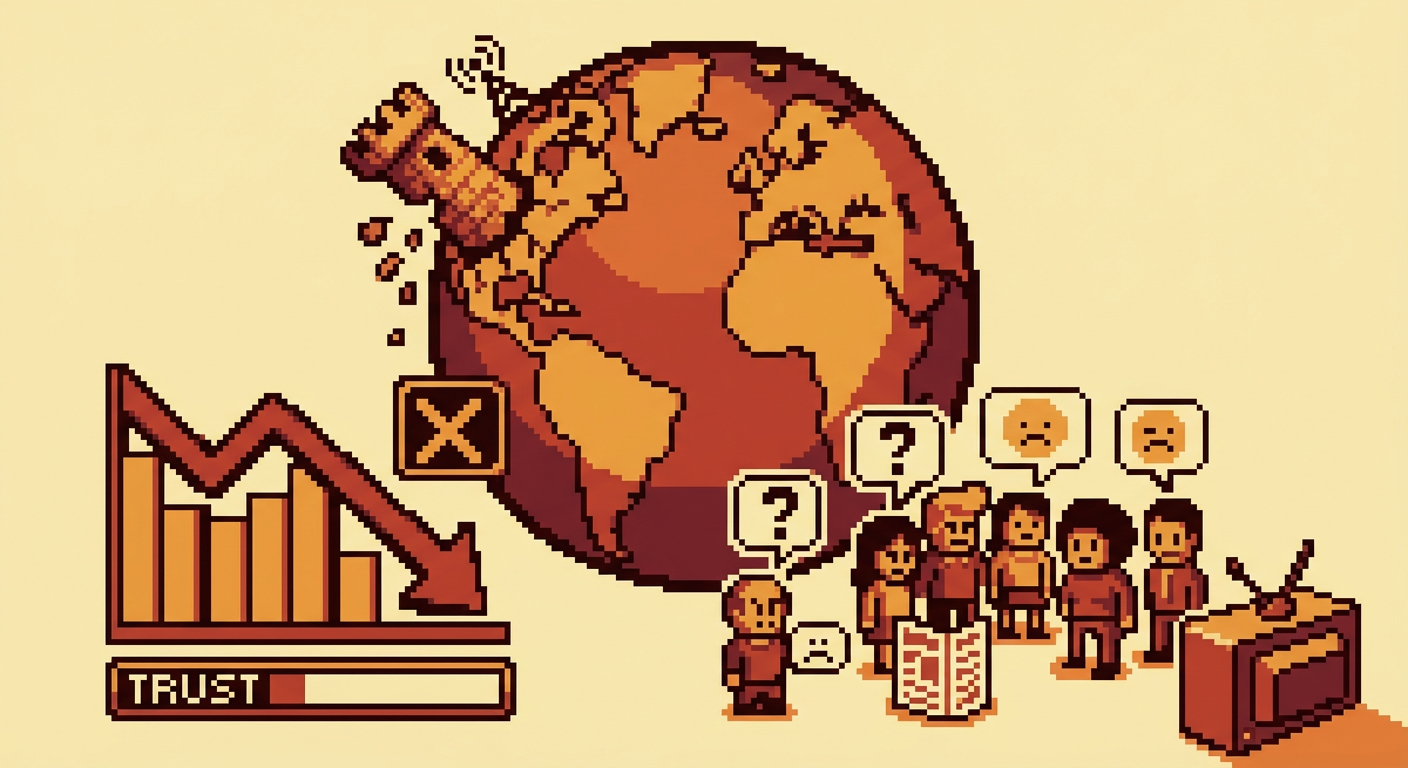
What happens next is predictable and depressing. Citizens who don’t trust their news sources just check out completely. They skip community meetings, don’t bother voting in local elections, and avoid engaging with their elected officials. That leaves a vacuum, and guess who rushes in to fill it? The loudest, angriest voices with the most extreme takes. They poison the well even more, making it harder for regular people to figure out what’s actually happening in their own backyards.
Political Division Fractures Shared Reality at the Local Level
Here’s where things get really weird. The same local newspaper can be seen as completely credible by some readers and totally biased by others, depending on their politics. I’ve watched this happen with stories about zoning disputes and school curriculum debates. A straightforward report about what happened at city hall somehow becomes evidence of media bias because people read it through their political filters.
Local newsrooms are stuck in an impossible situation. They try to stick to the facts, but that somehow makes everyone mad. Cover vaccination rates at the local elementary school? Half your readers think you’re pushing an agenda before they even finish reading. It’s not about whether the numbers are right anymore. People have already decided what they think about the reporter’s motives.
Things get even messier when national politics takes over local stories. Try writing about your city’s plan for municipal broadband, and suddenly half your readers are seeing it through the lens of federal overreach debates. Nobody wants to talk about whether it actually makes sense for their community. The Reuters Institute Digital News Report shows this pattern happening everywhere. National political divisions are infecting how people view all journalism, even when it’s just reporting on local water main repairs.
The Fact-Checking Paradox in Community Information
Professional fact-checkers are everywhere these days, but honestly, they’re not solving the problem where it matters most. They’re great at debunking lies about politicians or major policies, but they completely miss the hyperlocal misinformation that actually affects people’s lives. False rumors about contaminated water, school closures, or business shutdowns spread through Facebook groups and NextDoor faster than any fact-checker can keep up.
Here’s the catch: the people who need fact-checking the most are the least likely to trust it. If someone believes false claims about their city government, they’re probably not going to check with professional verification sites they already think are biased. It becomes this endless loop where misinformation just circulates in closed communities that reject any outside correction.
Social media companies tried slapping warning labels on disputed content, but research shows it barely makes a dent. People share flagged content almost as much as unflagged content. Those little warnings can’t compete with the psychological pull of information that confirms what people already believe, especially when it comes from their neighbors and friends.
Innovative Approaches to Information Integrity
There’s some interesting research showing that prevention works better than correction. Instead of trying to debunk false claims after they spread, you teach people to spot manipulation techniques beforehand. It’s like giving your immune system a vaccine. Local news outlets and community groups can actually do this by teaching residents how to check sources, recognize emotional manipulation, and verify information about local issues before hitting share.
The rise of AI-generated fake content is creating new headaches that local newsrooms really can’t handle. Imagine a deepfake audio clip of your mayor saying something controversial, or doctored photos from a local event. Most small-town newspapers don’t have the tech expertise or budget to detect sophisticated fake media targeting their communities. It’s honestly pretty scary.
First Draft misinformation research makes it clear that local newsrooms need to develop verification systems and find tech partners to help them. The stakes are higher in small communities where one convincing fake could swing a local election or destroy trust in public services.
Rebuilding Information Trust Through Community Engagement
Local news organizations need to completely rethink how they interact with their communities. Broadcasting information isn’t enough anymore. The outlets that are succeeding are opening up their processes, showing their work, and inviting community participation. That might mean publishing detailed source lists for controversial stories, hosting regular Q&A sessions about reporting methods, or partnering with libraries and schools to teach media literacy.
Building better information systems takes more than just better technology. Communities need sustained investment in professional journalism, support for local reporters who actually understand neighborhood dynamics, and institutions committed to transparency. Without that, we’ll keep seeing this fragmentation where everyone lives in their own reality, making effective local governance nearly impossible.
Figuring out how misinformation affects your community requires paying attention to both global trends and what’s happening in your own neighborhood. I’d love to hear about your experiences with information challenges where you live, and I encourage you to engage with local news sources through constructive feedback and community participation.